
Swiss Vote Highlights Europe’s Social Debate on Migration, Housing and Public Services
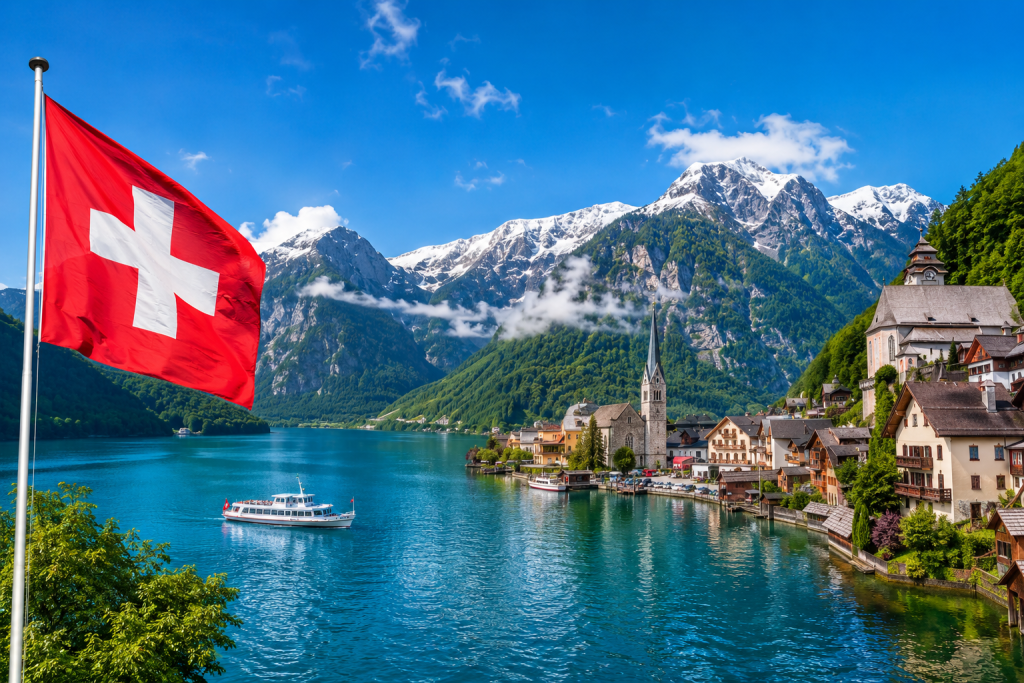
Switzerland’s recent national vote has brought one of Europe’s most sensitive social questions back into public debate: how can a modern country balance population growth, migration, housing pressure, public services and economic needs?
The proposal asked whether Switzerland should limit its population to 10 million by 2050. Supporters argued that continued population growth was increasing pressure on housing, public transport, healthcare, schools and local infrastructure. They also pointed to rising living costs and concerns among residents about quality of life.
Opponents warned that a fixed population cap would not solve housing shortages or public service problems. Instead, they argued, it could damage the labour market, weaken economic growth and complicate Switzerland’s relationship with the European Union, especially on the free movement of people.
Swiss voters rejected the proposal. The result shows that many citizens recognise the social pressure created by population growth, but a majority were not willing to support a rigid limit that could create wider economic and political consequences.
Housing has become one of the most visible social concerns across Europe. From Switzerland to France, Germany, the Netherlands and Ireland, many cities are facing high rents, limited housing supply and growing pressure on ordinary households. Young people, students, low-income families and foreign workers often find it increasingly difficult to access affordable homes.
Migration is not the only cause of Europe’s housing problem. Construction costs, land shortages, urban concentration, tourism, short-term rentals and years of insufficient planning all play a role. But when public policy fails to keep pace with population change, migration can quickly become a symbol of wider social anxiety.
The Swiss vote also shows how migration has moved from a border issue to a daily-life issue. In many European countries, public discussion is no longer only about who enters the country. It is also about schools, hospitals, housing, transport, neighbourhood change and local budgets.
This makes migration a question of public governance. Simple slogans, whether in favour of total openness or strict restriction, cannot answer the practical concerns of residents. European societies need stronger housing policy, better urban planning, more investment in public services and more effective integration policies.
At the same time, Europe is ageing. Many countries face labour shortages, rising pension costs and growing demand for healthcare and care workers. For Switzerland, foreign workers play an important role in services, hospitals, research, finance and many other sectors. A highly restrictive population policy could ease some anxieties in the short term, but it might also create new economic and social problems in the long term.
The Swiss decision can therefore be read as a pragmatic choice. Voters acknowledged the pressure on housing and public services, but they avoided a measure that could cut the country off from economic openness and European cooperation.
For the rest of Europe, the lesson is clear. Population change, migration, housing and public services cannot be treated as separate issues. When housing construction, schools, hospitals and local budgets do not keep pace with demographic change, public frustration grows. When public policy is better planned, population growth can also support economic vitality and social diversity.
Switzerland’s rejection of the population cap does not mean that Europe’s migration debate is over. It shows that European societies are still looking for a middle path: not closing themselves off from the world, but also not ignoring citizens’ concerns about housing, costs and public services.
In the coming years, similar debates are likely to return across Europe. The real test will be whether governments can turn social anxiety into practical reform, rather than allowing complex problems to be reduced to simple political slogans.
—
Copyright Notice
This article is published by Euro International Press.
Individuals, schools, associations and non-commercial organisations may republish the article provided the title, content and source information remain unchanged and the source is clearly credited as Euro International Press (eipress.eu).
Media organisations, commercial websites, news platforms, syndication services and other commercial entities wishing to reproduce, translate, adapt, republish or commercially distribute this content should obtain prior authorisation.
Licensing & Syndication:
info@gche.eu
© Euro International Press. All Rights Reserved.
Source: Euro International Press
Photo / Image: Image: EIPRESS editorial visual.
This article is based on publicly available information or editorial materials and does not imply endorsement by any institution mentioned unless expressly stated.
Published by Euro International Press (France). Individual readers, schools, associations and non-commercial organisations may republish this article while retaining the title, text and source. Media organisations, commercial websites, news platforms, aggregators and commercial entities should contact info@gche.eu for authorisation, syndication or partnership.
© Euro International Press. All Rights Reserved.