
France Heatwave 2026: Maximum Heat Alerts, Paris Real Feel Temperatures and What Travelers Should Know
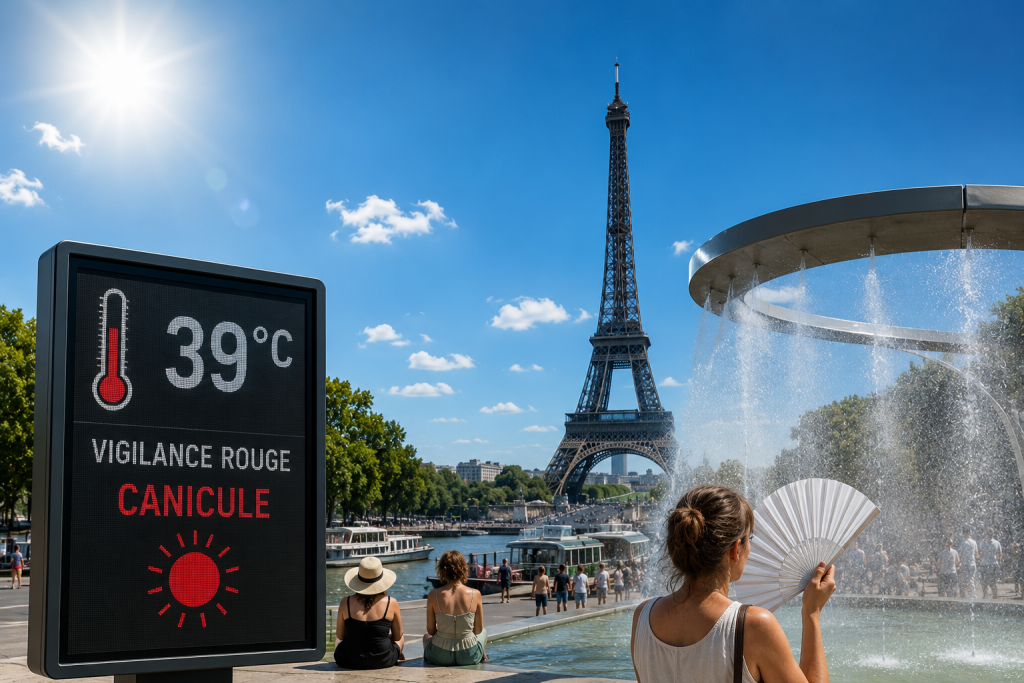
France is facing a severe June 2026 heatwave, with maximum heat alerts issued in dozens of areas, temperatures approaching or exceeding 40°C in several regions, and public safety measures affecting events, travel and daily life. For international travelers, businesses and residents, the latest heatwave is not just a weather story. It is a public health, tourism, urban management and business continuity issue.
French authorities have responded with emergency measures in high-risk areas. Public alcohol consumption has been restricted during some public events, outdoor activities may be adjusted or cancelled, and Paris has opened parks around the clock to help people find cooler spaces. Across Europe, heat alerts have also affected countries such as Germany, Italy and Spain, showing that the current episode is part of a wider Western European heatwave.
For English-speaking users searching “France heatwave 2026”, “Meteo France heat warning update”, “real feel temperature Paris” or “is Paris open during heatwave”, the key question is practical: how hot will it get, what remains open, what should travelers avoid, and how can people stay safe?
France maximum heat alert: what it means
France uses a heat warning system to inform the public about dangerous temperature conditions. A maximum heat alert means the risk is considered exceptional and can affect the whole population, not only vulnerable groups.
Children, elderly people, pregnant women, outdoor workers, people with chronic illnesses and people living in poorly cooled housing remain most at risk. But when temperatures approach 40°C or more, even healthy adults can suffer from dehydration, heat exhaustion or heatstroke.
For travelers, a maximum heat alert should be taken seriously. It may affect outdoor sightseeing, public transport comfort, festival schedules, sports activities and queues at tourist attractions.
Paris real feel temperature: why humidity and urban heat matter
The air temperature is only part of the story. In a large city like Paris, the “real feel” temperature can be much higher because of humidity, direct sun exposure, pavement, dense buildings and limited air circulation.
Urban heat islands make nights especially difficult. Asphalt, stone and concrete absorb heat during the day and release it slowly at night. This means that even after sunset, central areas of Paris may remain uncomfortably warm.
For visitors, this can affect walking tours, museum queues, outdoor dining, public transport and hotel comfort. Many older buildings in France do not have widespread air conditioning, which makes planning more important during extreme heat.
Is Paris open during the heatwave?
Paris remains open during the heatwave, but visitors should expect adjustments. Parks, cooling points, shaded spaces and public information become important parts of the city’s heat response.
Museums, restaurants, shops and major landmarks may continue operating, but travelers should check official updates before attending outdoor events or long public gatherings. Some events can be modified, postponed or cancelled depending on the alert level and local decisions.
The safest approach is to plan outdoor activities early in the morning or later in the evening, avoid long walks during peak heat, carry water, use shade whenever possible and allow extra rest time.
Europe heat dome: why the heat is spreading
The term “heat dome” is often used to describe a situation in which hot air becomes trapped under a strong high-pressure system. When this happens, temperatures can rise day after day and night-time cooling becomes limited.
In Western Europe, these heat episodes can be intensified by hot air moving north from North Africa or the Iberian Peninsula. When the pattern remains blocked, countries such as France, Spain, Italy, Germany and Switzerland can all experience dangerous heat at the same time.
This explains why the June heatwave is not limited to one country. It is part of a wider regional climate and weather pattern affecting travel, energy use, agriculture, public health and event planning across Europe.
Hot nights and health risks
Hot nights are one of the most dangerous aspects of a heatwave. When temperatures do not fall enough overnight, the body has less time to recover. Poor sleep, dehydration and fatigue can accumulate over several days.
This is especially risky for elderly people, babies, people with health conditions and those living in apartments without good ventilation or cooling. But travelers can also be affected, especially if they spend long hours outdoors during the day and sleep in warm rooms at night.
Signs of heat-related illness can include dizziness, headache, confusion, heavy sweating, weakness, nausea, rapid heartbeat or unusually high body temperature. In serious cases, medical help should be sought quickly.
What travelers should do during the France heatwave
Travelers visiting France during the heatwave should adapt their plans.
Check Météo-France warnings before leaving the hotel.
Avoid sightseeing during the hottest hours of the day.
Carry water and drink regularly.
Limit alcohol consumption during extreme heat.
Wear light clothing, a hat and sunscreen.
Choose shaded streets, museums, indoor attractions and parks.
Avoid long queues in direct sunlight.
Check whether outdoor events are cancelled or modified.
Pay attention to children, elderly relatives and people with health conditions.
Do not assume that every hotel, restaurant or apartment has strong air conditioning.
For tourists, the heatwave does not necessarily mean canceling a trip. But it does mean planning differently and taking official warnings seriously.
Businesses and events under pressure
The heatwave also affects businesses. Restaurants, hotels, retailers, construction companies, logistics operators, event organizers and tourist services must adapt quickly to protect staff and customers.
Outdoor work may need adjusted hours. Event organizers need water access, shade, medical support and clear communication. Retail and hospitality businesses may need to manage customer comfort and staff working conditions. Transport operators may face delays or passenger discomfort.
For companies, extreme heat is becoming part of risk management. It affects productivity, customer experience, insurance, event planning and employee safety.
Could France break temperature records?
During intense heatwaves, public attention often turns to temperature records. Searches for “hottest days ever recorded in France” or “temperatures above 40C Europe” increase because people want to understand whether the event is exceptional.
While individual records depend on official station measurements and later verification, the current June 2026 heatwave has already brought very high temperatures early in the summer season. The timing is important: when extreme heat arrives before people, buildings and cities are fully adapted to summer conditions, health risks may increase.
A new reality for European summers
The France heatwave of 2026 shows how extreme heat is changing summer life in Europe. It affects residents, tourists, workers, schools, care homes, city services and public events.
For travelers, the key is to stay informed and flexible. For businesses, the challenge is to protect people while maintaining operations. For cities, the long-term issue is adaptation: more shade, better cooling points, greener streets, heat-aware planning and stronger communication.
Extreme summer heat is becoming a recurring test for Europe. France’s current heatwave is a reminder that weather alerts are not only forecasts. They are practical signals that daily life, tourism and business operations may need to change quickly.
—
Copyright Notice
This article is published by Euro International Press.
Individuals, schools, associations and non-commercial organisations may republish the article provided the title, content and source information remain unchanged and the source is clearly credited as Euro International Press (eipress.eu).
Media organisations, commercial websites, news platforms, syndication services and other commercial entities wishing to reproduce, translate, adapt, republish or commercially distribute this content should obtain prior authorisation.
Licensing & Syndication:
info@gche.eu
© Euro International Press. All Rights Reserved.
Source: Euro International Press
Photo / Image: Image: EIPRESS editorial visual.
This article is based on publicly available information or editorial materials and does not imply endorsement by any institution mentioned unless expressly stated.
Published by Euro International Press (France). Individual readers, schools, associations and non-commercial organisations may republish this article while retaining the title, text and source. Media organisations, commercial websites, news platforms, aggregators and commercial entities should contact info@gche.eu for authorisation, syndication or partnership.
© Euro International Press. All Rights Reserved.