
Carrefour Recalls Haut-Poitou Melons After Cadmium Exceeds EU Limit
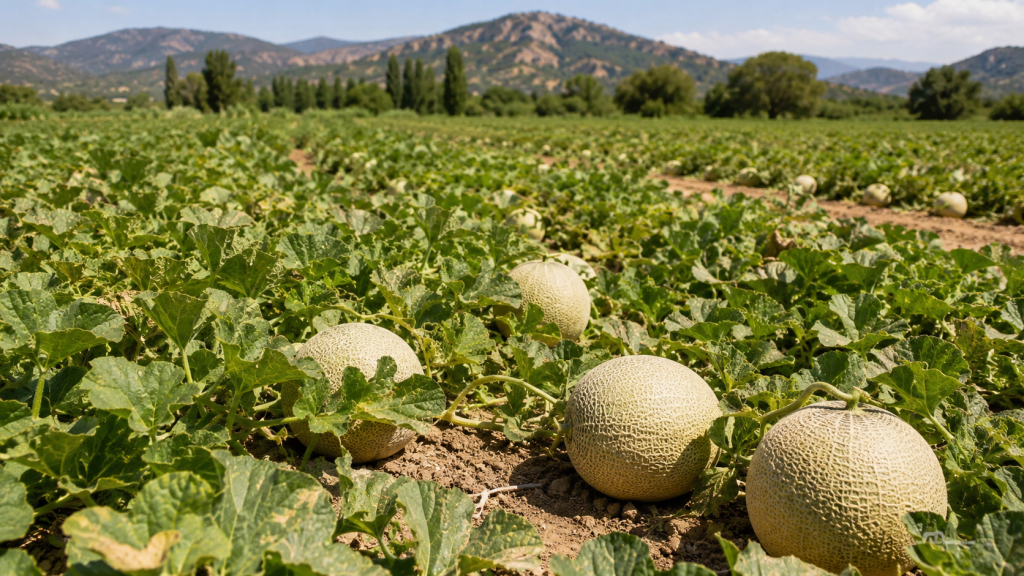
Carrefour is recalling Haut-Poitou IGP melons sold across France under its Reflets de France brand after testing found cadmium above the limit permitted by European food-safety rules. The affected product is identified as “Melon du Haut Poitou IGP RDF”. It was sold loose in Carrefour stores between 12 June and 22 July 2026.
Customers who still have one of the affected melons should not eat it. They may return it to a Carrefour store for a refund or replacement.
What is the European cadmium limit for melons?
European rules on maximum levels of contaminants classify melons as fruiting vegetables.
For this category, excluding aubergines, the maximum permitted concentration of cadmium is 0.020 milligrams per kilogram of fresh product. This is equal to 20 micrograms per kilogram of edible portion.
The limit applies after the food has been washed and any parts that are not normally eaten have been removed.
The test therefore does not refer only to contamination on the outside of the melon. It concerns the flesh that consumers are expected to eat.
The recall notice states that the legal limit was exceeded, but it does not provide the exact laboratory result.
It is therefore not possible to determine how far above the European limit the affected melons were or to calculate precisely how much cadmium a person may have consumed after eating one.
Why can cadmium be found in melons?
Cadmium is a heavy metal that occurs naturally in some soils. Levels may also rise because of industrial pollution, phosphate fertilisers, contaminated irrigation water or farming on polluted land.
As the plant grows, it can absorb cadmium through its roots. The metal may then pass into leaves, seeds or fruit.
Cadmium has no obvious smell or taste. A melon may look fresh, smell normal and show no visible signs of contamination while still containing more cadmium than permitted.
Unlike soil or some residues on the surface, cadmium that has entered the plant cannot be removed by simply washing the fruit.
Removing the skin also does not guarantee that the flesh is safe, because the European limit already applies to the edible part of the melon.
What are the health risks of cadmium?
The main concern is usually not immediate illness after eating one food item.
Cadmium can build up in the body after repeated exposure. The kidneys are one of the main organs in which it may accumulate.
Long-term exposure may affect kidney function. It may also interfere with calcium metabolism, reduce bone mineral density and contribute to weaker bones.
Cadmium is also recognised as carcinogenic to humans under certain exposure conditions.
The European Food Safety Authority has established a tolerable weekly intake of 2.5 micrograms of cadmium per kilogram of body weight.
For an adult weighing 60 kilograms, this corresponds to 150 micrograms per week. For a child weighing 20 kilograms, it corresponds to 50 micrograms per week.
This does not mean that exceeding the figure once will automatically cause poisoning. The reference value is mainly used to assess the effects of repeated and long-term exposure from the entire diet.
Should someone see a doctor after eating one of the melons?
The recall notice does not advise everyone who has eaten the product to seek medical care.
Eating one affected melon does not necessarily mean that a person will suffer health damage. The risk depends on the quantity of cadmium consumed and how often exposure occurs.
Because the exact test result has not been published, it is not possible to calculate the exposure associated with one portion or one whole melon.
Consumers who have already eaten some of the product should not induce vomiting or use products advertised as detox treatments.
They should stop eating any remaining melon.
People with kidney disease, a history of occupational exposure to heavy metals or another relevant medical condition may contact a doctor and provide the product name, purchase date and approximate amount eaten.
Who should be particularly cautious?
Children may receive a higher dose in relation to their body weight when eating the same amount as an adult.
Pregnant women, people with kidney problems and consumers whose diet already includes significant sources of cadmium should also avoid any recalled product.
Food-related cadmium exposure does not come only from fruit. It may also be found in cereals, potatoes, some vegetables, shellfish, organ meats, cocoa, seeds and certain chocolate products.
Food-safety authorities therefore assess total exposure from the entire diet rather than considering only one product.
How can consumers identify the recalled melons?
The recall concerns Reflets de France Haut-Poitou IGP melons.
They were purchased from Carrefour stores between 12 June and 22 July 2026.
They were sold loose or individually, without separate packaging, and were generally displayed at room temperature.
Because the melons were not packaged, consumers may not have a barcode, batch number or label to help identify them.
Anyone who bought a melon matching these details and cannot confirm its exact origin should not eat it.
The product may be returned to a Carrefour store for a refund or exchange.
Carrefour’s consumer service can be reached on 0805 908 070 from Monday to Saturday between 9 a.m. and 7 p.m.
The authorities have not yet published the exact cadmium concentration, the scale of the excess or the precise source of the contamination.
Source: Euro International Press
Photo / Image: Image: EIPRESS editorial visual.
This article is based on publicly available information or editorial materials and does not imply endorsement by any institution mentioned unless expressly stated.
Published by Euro International Press (France). Individual readers, schools, associations and non-commercial organisations may republish this article while retaining the title, text and source. Media organisations, commercial websites, news platforms, aggregators and commercial entities should contact info@gche.eu for authorisation, syndication or partnership.
© Euro International Press. All Rights Reserved.