
E-Bike Battery Degradation: How Long Does a Pack Really Last?
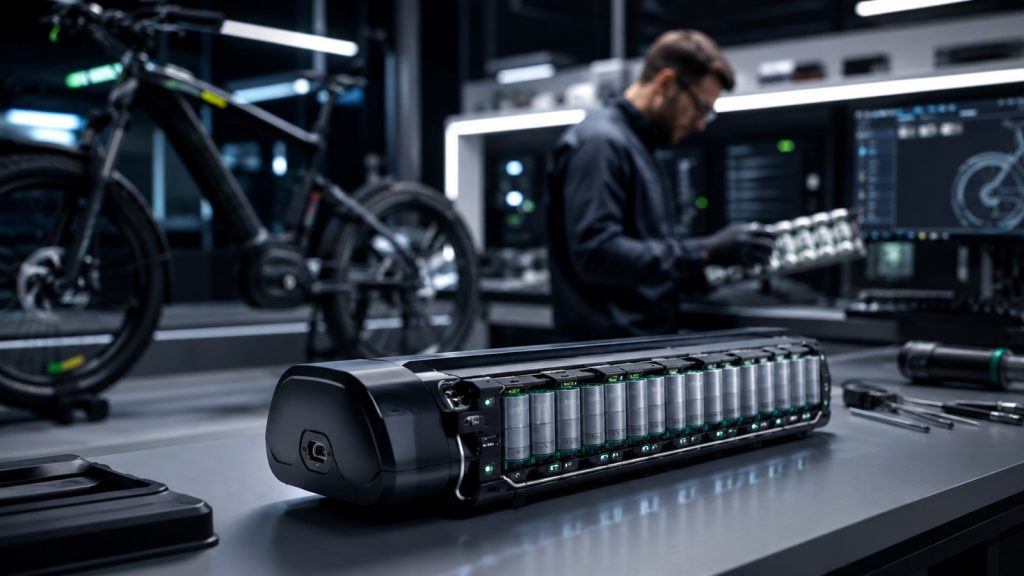
When spending thousands of Euros on a premium E-Bike via online channels, long-term battery cell degradation tracking represents the core lifetime cost of ownership. How many high-intensity charge-discharge cycles can a high-grade power pack truly survive? EIP Micro-Mobility Lab conducted an accelerated stress test examining electrochemical aging. The vast majority of top-tier E-Bikes utilize automotive-grade 18650 or 21700 lithium cells (e.g., Panasonic, Samsung, or CATL). Under standard operating profiles, after 500 full 0-100% cycles (equivalent to roughly 25,000 km of real riding), State of Health (SoH) drops to about 80% of original capacity. For heavy daily commuters, this equates to 3 to 5 years of stable operational service. However, testing proves two habits cut lifespan in half: continuous ultra-high power fast charging without thermal cooling intervals, and typically storing the pack indefinitely at 100% capacity inside hot summer attics. Adopting a conservative 20%-80% state-of-charge profile is the scientifically proven way to maximize longevity.
Source: Euro International Press
Photo / Image: Image: EIPRESS editorial visual.
This article is based on publicly available information or editorial materials and does not imply endorsement by any institution mentioned unless expressly stated.
Published by Euro International Press (France). Individual readers, schools, associations and non-commercial organisations may republish this article while retaining the title, text and source. Media organisations, commercial websites, news platforms, aggregators and commercial entities should contact info@gche.eu for authorisation, syndication or partnership.
© Euro International Press. All Rights Reserved.