
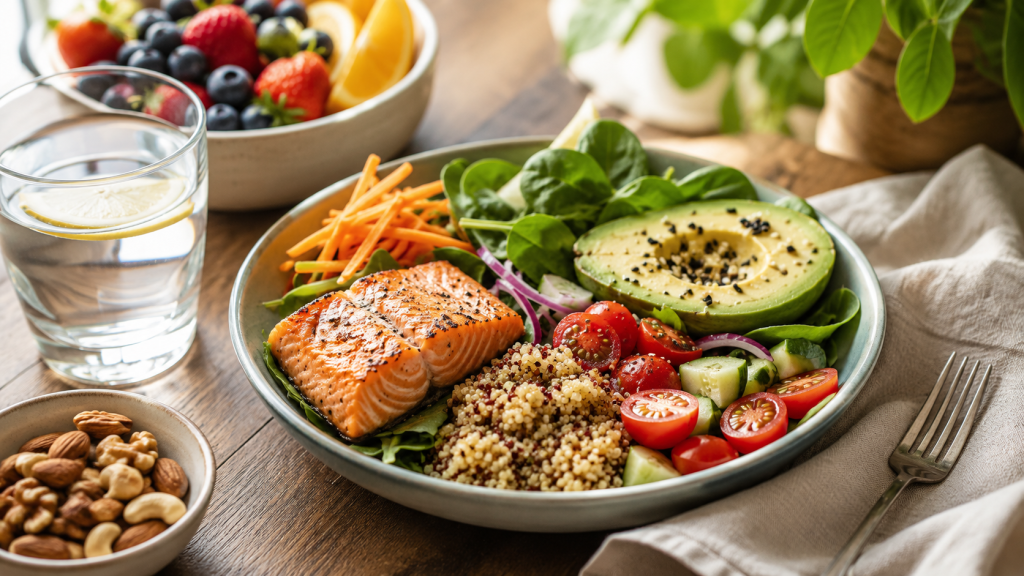
Healthy eating is not a short-term diet, nor does it mean removing every food you enjoy from daily life. A truly sustainable way of eating should be based on balance, regularity and moderation, helping the body receive steady energy while reducing unnecessary burden.
In a fast-paced lifestyle, many people associate healthy eating with weight control, calorie reduction or avoiding carbohydrates. However, from a long-term health perspective, the core of nutrition is not simply “eating less”, but “eating more reasonably”. Whether meals are regular, food choices are diverse, and vegetables, fruits, quality protein and whole grains are included often matters more than counting calories alone.
Healthy eating begins with balance, not extremes
Many popular diets emphasize one type of food or completely exclude another. But for most people, daily eating should not become too extreme. Carbohydrates, protein, fats, vitamins, minerals and dietary fiber are all needed for the body to function properly.
Staple foods are not the enemy of healthy eating. Instead of avoiding them completely, a better approach is to choose higher-quality staples, such as oats, brown rice, whole-grain bread, sweet potatoes and corn. These foods usually contain more dietary fiber, which can help maintain satiety and support a steadier eating rhythm.
Protein is also important. Eggs, fish, poultry, soy products, milk and yogurt are common sources of protein in everyday meals. For people under work pressure, those who exercise more, or those in a growth stage, adequate protein intake helps support tissue repair and daily metabolic needs.
Choose more natural foods and fewer highly processed products
Another important direction for healthy eating is to bring food closer to its natural state. Fresh vegetables, fruits, beans, nuts, whole grains, fish and lean meat are generally better choices for daily meals than sugary drinks, fried foods, desserts, processed meats and heavily packaged snacks.
The problem with highly processed foods is not only that they can be high in calories. They often also contain more added sugar, salt and fat. Eating them occasionally does not mean a person is unhealthy, but relying on them as regular meals or snacks can increase energy intake and reduce overall diet quality.
A simple way to judge a meal is to look at the color on the plate. Dark green vegetables, orange and yellow fruits or vegetables, beans, whole grains and quality protein together often provide more nutritional variety than a meal dominated by refined rice, noodles or fried foods.
Regular meals matter more than repeated dieting
Many people try to control weight through short-term dieting. But in the long run, excessive restriction is difficult to maintain and may lead to overeating later. Regular meals help the body build a stable rhythm and reduce the chance of choosing high-sugar or high-fat foods because of extreme hunger.
Breakfast does not need to be complicated, but it is better when it includes a staple food, protein and fruit or vegetables. Whole-grain bread with eggs and fruit, or oats with yogurt and nuts, are simple and practical choices. For lunch and dinner, a useful idea is to fill half the plate with vegetables, one quarter with staple foods and one quarter with protein.
If hunger appears between meals, fruit, unsweetened yogurt, nuts or whole-grain foods can be better options than sweet drinks or high-sugar snacks.
Reducing sugar and salt is an important daily step
Healthy eating does not require completely rejecting sweet or salty flavors, but it does require attention to frequency and overall intake. Sugary drinks, milk tea, desserts and processed snacks can add sugar to the diet without people noticing. Replacing sugary drinks with water, tea or unsweetened beverages is one of the easiest changes to begin with.
Salt intake also deserves attention. Many processed foods, takeout meals, sauces and pickled products contain high levels of salt. When cooking at home, reducing salt and soy sauce slightly and using herbs, garlic, ginger, lemon juice or pepper for flavor can help the palate gradually adapt to lighter tastes.
Healthy eating should fit real life
A healthy diet is not better simply because it is stricter. It is better when it fits a person’s real life and can be maintained. Work schedules, family habits, budgets, cultural backgrounds and physical conditions all differ, so healthy eating does not need to look the same for everyone.
For office workers, practical changes may include ordering takeout less often, adding more vegetables and drinking fewer sugary beverages. For families, it may mean cooking with less oil, adding more fish and soy products, and keeping fewer snacks at home. For people who often eat outside, choosing lighter meals, adding vegetables and reducing fried or heavily sauced dishes can also make a real difference.
Dietary change should be gradual
Healthy eating is not completed in one day, and it does not require perfection. Compared with changing every habit suddenly, a more sustainable method is to adjust one small part at a time. A person may first replace one sugary drink a day with water, then double the vegetable portion at dinner, and later reduce the frequency of fried foods and desserts.
When dietary change becomes a daily habit rather than a short-term task, both the body and the mind are more likely to accept it. The purpose of a healthy lifestyle is not to create pressure, but to help people feel more stable, lighter and more energetic over time.
Conclusion
Healthy eating is not strict dieting, nor is it the pursuit of one single standard. It is more like a long-term lifestyle: eating regularly, choosing diverse foods, increasing natural ingredients, reducing foods that are high in sugar, fat and salt, and making sustainable adjustments according to one’s own rhythm.
Starting today, even a small change can matter: adding one more serving of vegetables, drinking one less sugary beverage, or replacing part of refined staples with whole grains. The most effective dietary changes are often not the most extreme ones, but the ones that can be continued.
Copyright Notice | Public Release
This article is originally published by Euro International Press.
Individual readers, schools, associations and non-commercial organizations may republish this article provided that the title, full text and source information are retained, with attribution to Euro International Press / eipress.eu.
Media organizations, commercial websites, news platforms, press agencies, content aggregators, commercial social media networks and other commercial entities must contact info@gche.eu for authorization, syndication, translation, adaptation, republication, content supply or partnership.
© Euro International Press. All Rights Reserved.