Heatwave Tests Europe’s Public Services as Schools, Hospitals and Cities Adapt
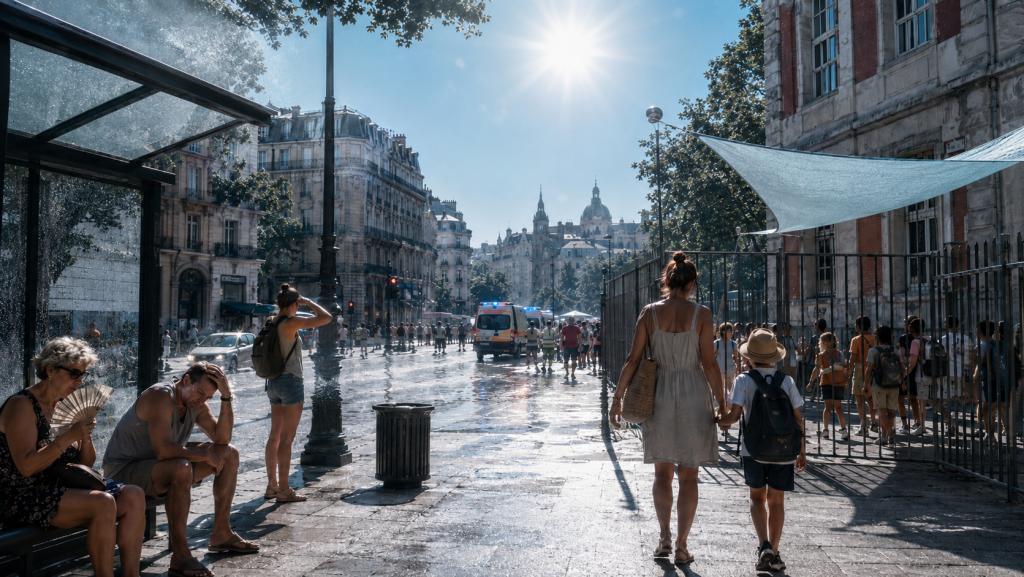
Euro International Press, Paris — A severe heatwave across Europe is putting renewed pressure on schools, hospitals, transport networks, public events and urban services, highlighting how extreme temperatures are becoming a long-term challenge for public infrastructure and city governance.
In France and several other European countries, high temperatures have disrupted school routines, public transport and cultural activities. The need to protect children, elderly residents and vulnerable groups has moved higher on the public agenda as local authorities face more frequent and intense heat events.
Educational facilities are receiving particular attention. French utility EDF has announced an €80 million investment to support air-cooling systems in schools, kindergartens and daycare centres, reflecting growing concern over safety and comfort for children and staff during periods of extreme heat.
Hospitals are also facing increased pressure. Prolonged heat can lead to higher emergency demand, greater risks for elderly residents and additional strain on medical staff. In several regions, health services have reinforced emergency planning, adjusted non-urgent activities and prepared additional capacity for heat-related cases.
The current heatwave shows that extreme weather is no longer only a meteorological event. It affects transport, public gatherings, energy demand, healthcare, education and local administration. For European cities, the issue is shifting from short-term emergency response to long-term adaptation.
Urban planners and public authorities are increasingly expected to consider heat-resistant buildings, shaded public spaces, cooling systems in schools and hospitals, targeted health alerts and better protection for vulnerable groups. As climate-related heat events become more frequent, Europe’s public services will need to adapt not only through emergency measures, but also through sustained investment in resilient infrastructure.
Source: Euro International Press
Photo / Image: Image: EIPRESS editorial visual.
This article is based on publicly available information or editorial materials and does not imply endorsement by any institution mentioned unless expressly stated.
Published by Euro International Press (France). Individual readers, schools, associations and non-commercial organisations may republish this article while retaining the title, text and source. Media organisations, commercial websites, news platforms, aggregators and commercial entities should contact info@gche.eu for authorisation, syndication or partnership.
© Euro International Press. All Rights Reserved.