WHO and INTERPOL join forces against falsified medicines
A medicine’s label can be copied while its ingredients or origin are concealed. By the time treatment fails, the problem may extend far beyond a consumer complaint.
WHO and INTERPOL announced a cooperation agreement on 16 October covering falsified medicines, vaccines and medical devices, among other threats.
Poor quality and deliberate falsification are different problems. Substandard products fail quality specifications; falsified products misrepresent their identity, composition or source. Laboratories and regulators establish what is wrong. Police may be needed to trace those organising supply.
WHO identifies unauthorised online sales and informal markets as important distribution channels. Cross-border supply chains spread the risk beyond the place of production.
The agreement also covers organ trafficking, counterfeit protective equipment, unsafe food and illicit alcohol. It establishes cooperation, rather than reporting a completed seizure operation: the next step is connecting health findings with investigations.
Sources
Source: WHO / INTERPOL
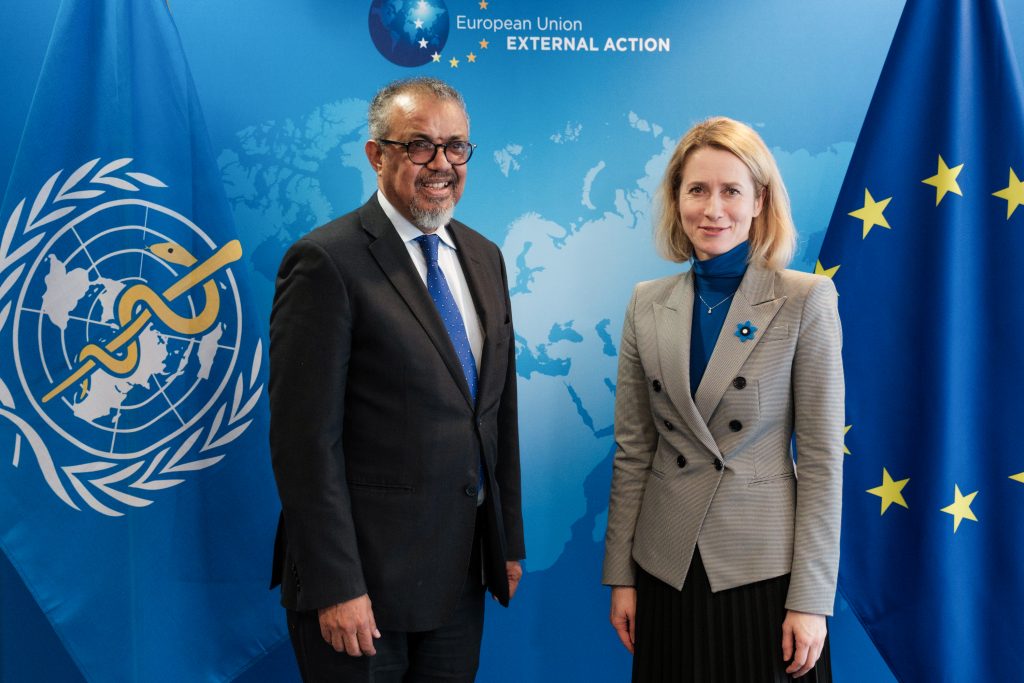
Photo / Image: Archive: WHO Director-General Tedros Adhanom Ghebreyesus (left) with EU High Representative Kaja Kallas in Brussels, 5 March 2025. Not the WHO–INTERPOL agreement signing. © European Union.
This article is based on publicly available information or editorial materials and does not imply endorsement by any institution mentioned unless expressly stated.
Published by Euro International Press (France). Individual readers, schools, associations and non-commercial organisations may republish this article while retaining the title, text and source. Media organisations, commercial websites, news platforms, aggregators and commercial entities should contact info@gche.eu for authorisation, syndication or partnership.
© Euro International Press. All Rights Reserved.