
Braking Distance and Tire Grip: What Urban Riders Should Know
On intricate multi-modal European urban transit corridors, many severe cycling accidents stem from a blind overconfidence in a vehicle's braking boundary. This is highly apparent when encoun…
Quick Verdict
On intricate multi-modal European urban transit corridors, many severe cycling accidents stem from a blind overconfidence in a vehicle's braking boundary. This is highly apparent when encoun…
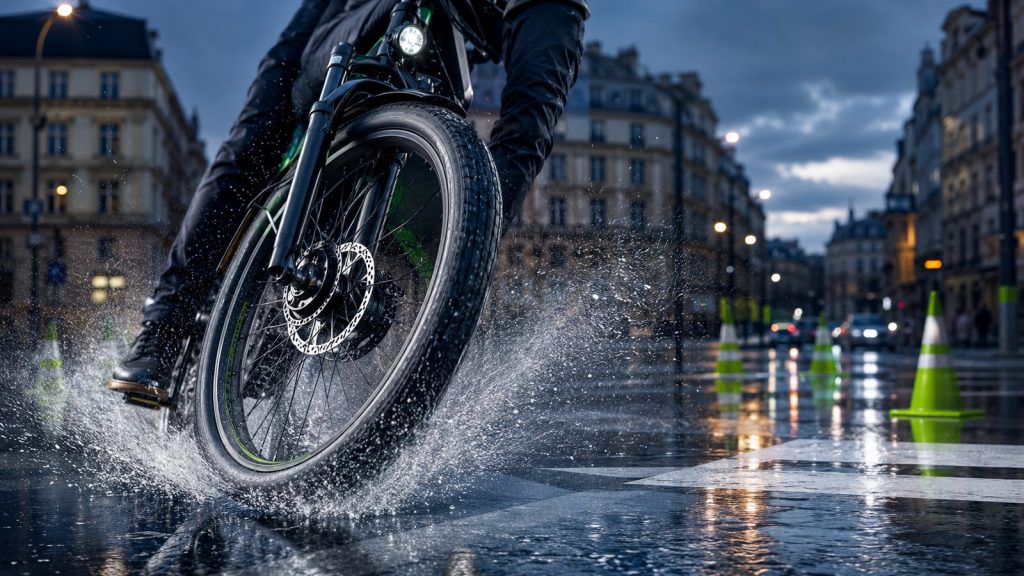
On intricate multi-modal European urban transit corridors, many severe cycling accidents stem from a blind overconfidence in a vehicle’s braking boundary. This is highly apparent when encountering vintage European cobblestone alleys or wet autumn leaves, where stopping distances multiply rapidly. EIP Safety Lab captured high-frequency trajectory metrics analyzing distinct braking architectures. Data proves that traditional mechanical rim brakes or cheap cable-pull disc brakes suffer major power loss through housing friction, resulting in dangerously extended stopping curves on wet surfaces. Conversely, premium setups leveraging 180mm dual-piston hydraulic oil disc brakes mated to high-silica all-weather multi-groove compound tires (e.g., Continental or Michelin urban lines) cut braking distance nearly in half while providing progressive linear lever modulation that prevents wheel lockup. We warn all online buyers: upgrading to premium all-weather tires yields an incomparably higher safety ROI than investing in cosmetic carbon fiber accessories.