
E-Bike Battery Degradation: How Long Does a Pack Really Last?
When spending thousands of Euros on a premium E-Bike via online channels, long-term battery cell degradation tracking represents the core lifetime cost of ownership. How many high-intensity…
Quick Verdict
When spending thousands of Euros on a premium E-Bike via online channels, long-term battery cell degradation tracking represents the core lifetime cost of ownership. How many high-intensity…
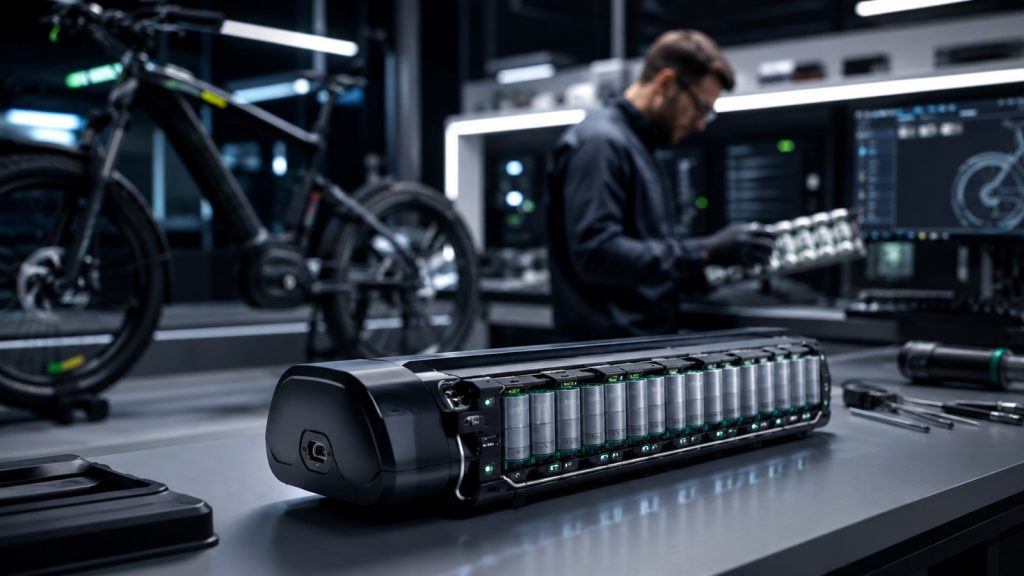
When spending thousands of Euros on a premium E-Bike via online channels, long-term battery cell degradation tracking represents the core lifetime cost of ownership. How many high-intensity charge-discharge cycles can a high-grade power pack truly survive? EIP Micro-Mobility Lab conducted an accelerated stress test examining electrochemical aging. The vast majority of top-tier E-Bikes utilize automotive-grade 18650 or 21700 lithium cells (e.g., Panasonic, Samsung, or CATL). Under standard operating profiles, after 500 full 0-100% cycles (equivalent to roughly 25,000 km of real riding), State of Health (SoH) typically drops to about 80% of original capacity. For heavy daily commuters, this equates to 3 to 5 years of stable operational service. However, testing proves two habits cut lifespan in half: continuous ultra-high power fast charging without thermal cooling intervals, and storing the pack indefinitely at 100% capacity inside hot summer attics. Adopting a conservative 20%-80% state-of-charge profile is the scientifically proven way to maximize longevity.