Hill Climb Performance: Why Motor Torque Matters in European Cities
Unlike flat, geometric layouts found in newly constructed megacities, historical European capitals like Paris (Montmartre), Lisbon, or Edinburgh feature severe, continuous vertical inclines.…
Quick Verdict
Unlike flat, geometric layouts found in newly constructed megacities, historical European capitals like Paris (Montmartre), Lisbon, or Edinburgh feature severe, continuous vertical inclines.…
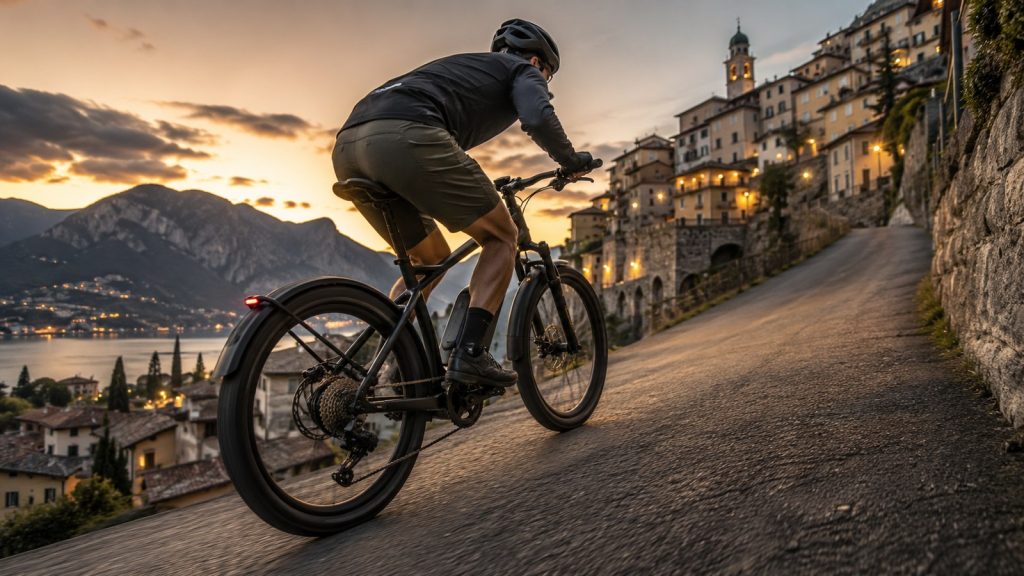
Unlike flat, geometric layouts found in newly constructed megacities, historical European capitals like Paris (Montmartre), Lisbon, or Edinburgh feature severe, continuous vertical inclines. On these unforgiving grades, the factor determining whether you arrive at the office soaked in sweat is not the motor’s nominal wattage (which governs flat-line terminal velocity) but its raw **Torque output (measured in Newton-meters, Nm)**. EIP Drivetrain team performed real-world hill-climb duels across aggressive inclines. The metrics revealed that a standard 250W commuter e-bike possessing only 35Nm of rear hub torque bogged down significantly on inclines exceeding a 12% grade, requiring heavy standing pedaling from the rider. In sharp contrast, a flagship model utilizing the DJI Avinox mid-drive assembly pumping out a massive 105Nm industrial-grade torque conquered the same incline effortlessly, maintaining the maximum 25 km/h legal assist speed limit with light, elegant cadence. This clarifies why consumers in undulating European topography must prioritize high-torque mid-drives.