
Braking Distance and Tire Grip: What Urban Riders Should Know
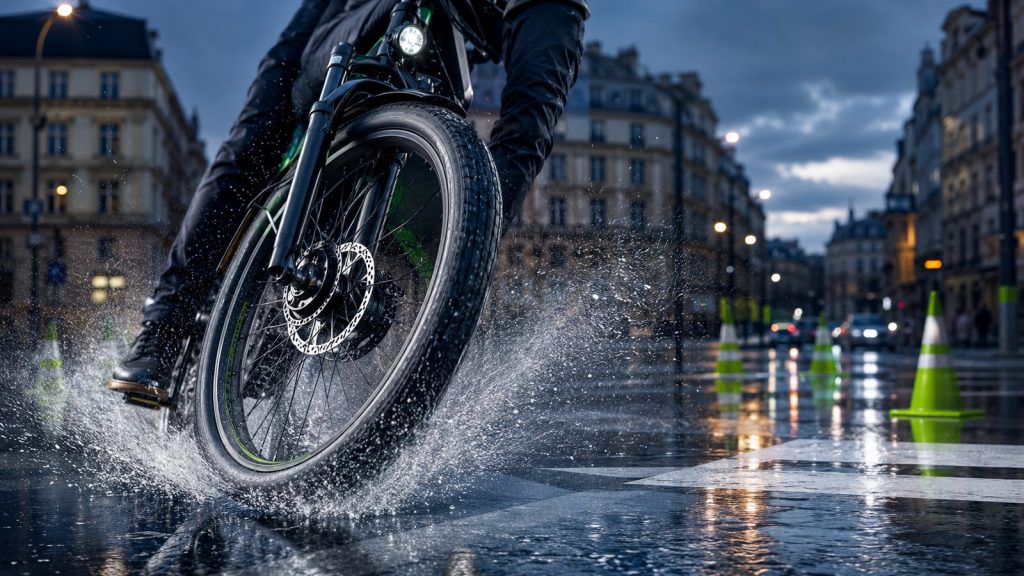
On intricate multi-modal European urban transit corridors, many severe cycling accidents stem from a blind overconfidence in a vehicle’s braking boundary. This is highly apparent when vintage European cobblestone alleys or wet autumn leaves, where stopping distances multiply rapidly. EIP Safety Lab captured high-frequency trajectory metrics analyzing distinct braking architectures. Data proves that traditional mechanical rim brakes or cheap cable-pull disc brakes suffer major power loss through housing friction, resulting in encounter in dangerously extended stopping curves on wet surfaces. Conversely, premium setups leveraging 180mm dual-piston hydraulic oil disc brakes mated to high-silica all-weather multi-groove compound tires (e.g., Continental or Michelin urban lines) cut braking distance nearly in half while providing progressive lever linear modulation that prevents wheel lockup. We warn all online buyers: upgrading to premium all-weather tires yields an incomparably higher safety ROI than investing in cosmetic carbon fiber accessories.
Source: Euro International Press
Photo / Image: Image: EIPRESS editorial visual.
This article is based on publicly available information or editorial materials and does not imply endorsement by any institution mentioned unless expressly stated.
Published by Euro International Press (France). Individual readers, schools, associations and non-commercial organisations may republish this article while retaining the title, text and source. Media organisations, commercial websites, news platforms, aggregators and commercial entities should contact info@gche.eu for authorisation, syndication or partnership.
© Euro International Press. All Rights Reserved.